
When the Coffs Coast skies really open up, blocked drains are hands-down one of the most common call-outs we get. Here’s what’s usually behind them, the signs to watch for, and how we get things flowing again.
Storm season on the Coffs Coast means heavy, sudden rainfall, and that’s exactly when drains that have been quietly narrowing all year finally give up. A blocked drain rarely happens out of nowhere. It’s usually the result of something building up gradually, be it tree roots, grease, or leaf litter, until a big rain event pushes more water through the system than a partially blocked pipe can handle.
This guide covers what causes blocked drains on the Coffs Coast, the signs your drains are heading that way, how a blockage is properly diagnosed and cleared, and when a blocked drain stops being an inconvenience and becomes an emergency.
Quick summary
- Storm season blocked drains are usually caused by tree root intrusion, leaf litter, grease build-up, or heavy rainfall overwhelming pipes that were already partially blocked.
- Slow drainage, gurgling pipes, bad smells, and water backing up into sinks or showers are all early warning signs worth acting on before the next downpour.
- A CCTV drain camera shows exactly what’s causing a blockage before any clearing work starts, so the right method is used the first time.
- Sewage backing up inside the home, an overflowing toilet, or blockages affecting the whole property are signs it’s an emergency, not a wait-and-see job.
- Emerald Beach Plumbing clears blocked drains across the Coffs Coast 24/7, using CCTV inspection, high-pressure jetting, and electric eels to diagnose and fix the problem properly.
What Causes Blocked Drains in Coffs Harbour
Most blocked drains in Coffs Harbour come down to four things: leaf litter, tree roots, grease build-up, and heavy storm rainfall pushing more water through an already-narrowed pipe. Blockages tend to build slowly before storm season rain finally exposes them, and a handful of causes come up again and again across the region.
Leaf Litter and Debris From Leafy Blocks
Homes on tree-heavy blocks and in leafier suburbs shed a steady stream of leaves, bark, and twigs into gutters and stormwater drains year-round. During storm season, that debris gets washed into the system all at once, catching on any existing narrowing in the pipe and building into a proper blockage rather than washing straight through.
Tree Root Intrusion in Older Suburbs
Established trees are common across Coffs Harbour’s older suburbs, and their roots are naturally drawn to the moisture inside sewer and stormwater pipes. Even a hairline crack or a slightly loose joint is enough for fine roots to work their way in. Once inside, they thicken and branch out, gradually trapping debris until the pipe narrows or collapses altogether.
Grease and Food Waste in Kitchen Drains
Fats, oils, and grease (we call ’em FOGs) go down the kitchen sink, then cool and solidify inside the pipe, gradually building up on the walls in much the same way as plaque narrows an artery. Food scraps stick to that build-up, and what starts as slow draining eventually becomes a full blockage. Keeping fats, oils, and grease out of the sink and using a strainer to catch food scraps is the simplest way to prevent it, and it takes pressure off the local sewer network the City of Coffs Harbour maintains across the region.
Storm Season Rainfall Overwhelming Pipes
A pipe running at reduced capacity because of roots or debris can often cope with everyday use. A heavy storm sends a much larger volume of water through the same system in a short window, and that’s usually the moment a partial blockage turns into standing water, an overflow, or a backed-up drain.
Warning Signs to Watch For Before Storm Season
The earliest signs of a blocked drain are slow drainage, gurgling pipes, bad smells, and water backing up into sinks or showers. Catching these early, ideally before storm season sets in, means a straightforward fix rather than an emergency call-out in the middle of a downpour.
Why Is My Sink or Shower Draining Slowly?
Water that takes longer than usual to clear from a sink, shower, or bath is often the first sign of a narrowing pipe. It’s easy to put down to a one-off, but drainage that’s consistently sluggish across more than one fixture usually points to a blockage building further down the line.
Why Does My Drain Smell?
A persistent bad smell from a drain is usually trapped organic matter, whether that’s grease, food waste, or leaf litter, breaking down inside the pipe. It’s rarely a smell that clears up on its own.
Why Do My Pipes Gurgle?
Gurgling from a drain, toilet, or nearby fixture when water runs elsewhere in the house is a sign that air is being trapped and forced back through the system by a restriction further along the pipe. It’s one of the earlier warning signs, and often shows up before drainage visibly slows down.
Why Is Water Backing Up Into My Sink or Shower?
When water rises in one fixture while another is being used, such as a shower backing up when the toilet is flushed, that’s a sign the blockage is affecting a shared section of pipe rather than a single fixture. This is usually a stage where a CCTV inspection is worth booking rather than waiting to see if it resolves itself.
How Drain Blockages Are Diagnosed and Cleared
A blocked drain is usually diagnosed with a CCTV camera, then cleared with high-pressure jetting or an electric eel depending on the cause. Getting the diagnosis right matters as much as the clearing method: different causes call for different tools, and using the right one the first time avoids paying for a fix that doesn’t address the actual problem.
CCTV Drain Camera Inspection
A CCTV drain camera is fed directly into the pipe to show exactly what’s causing the blockage and where, whether that’s tree roots, a collapsed section, or built-up debris. Seeing the problem directly, rather than guessing from the symptoms, means the right fix gets used straight away instead of working through options by trial and error.
High-Pressure Jetting
High-pressure water jetting blasts through grease, root intrusion, and compacted debris, clearing the full width of the pipe rather than just punching a hole through the blockage. It’s typically the go-to method for tougher clogs and tends to leave the pipe cleaner for longer than mechanical clearing alone.
Electric Eel Clearing for Smaller Blockages
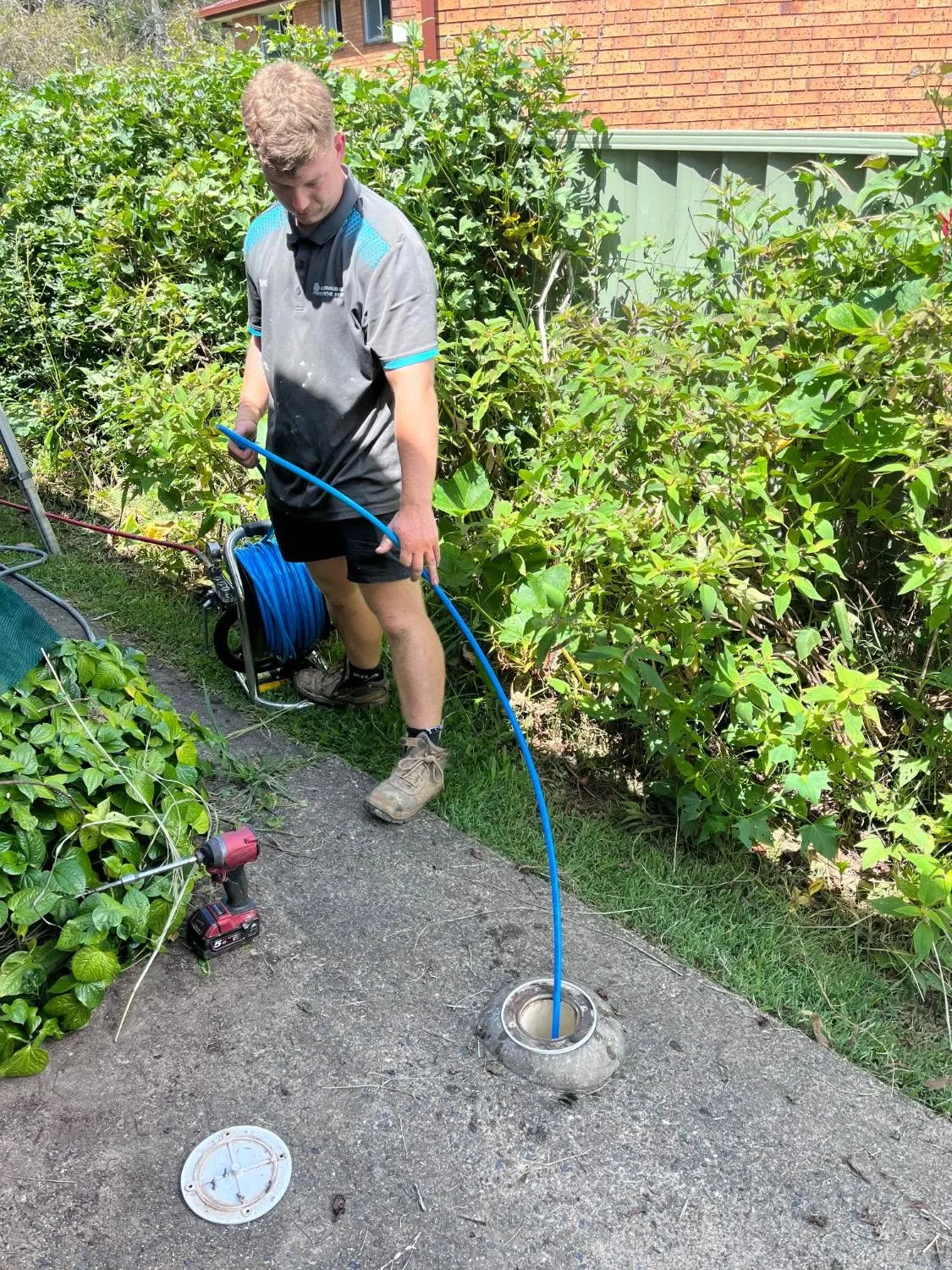
For smaller or more localised blockages, an electric eel is fed into the pipe to physically break up and remove the obstruction. It’s a more targeted tool than jetting, useful where a blockage is confined to a shorter section of pipe or where jetting isn’t practical.
Pipe Locating for Hidden Pipework
Not every property has clear records of where its stormwater or sewer pipes actually run, particularly on older blocks. Pipe locating equipment maps the exact path and depth of buried pipework, so a blockage can be pinpointed accurately and cleared with the right method rather than by guesswork.
When a Blocked Drain Becomes an Emergency
Most blockages can wait for a booked visit. A handful, though, are a drop-everything job that needs an emergency drain plumber straight away.
Sewage Backing Up Into the Home
Sewage coming back up through a drain, toilet, or floor waste is a health hazard as well as a plumbing problem, and it means the blockage is serious enough to need emergency attention rather than a booked appointment.
Overflowing Toilets or Drains
A toilet or floor drain that overflows rather than draining down, especially if it happens more than once, usually means the blockage sits further down the system where it affects more than one fixture. This is worth treating as urgent before it worsens with the next heavy rain.
Blockages Affecting an Entire Property
If every drain in the house is slow or backed up at once, rather than just one sink or shower, the blockage is likely in a shared line rather than an isolated fixture. That scale of blockage tends to get worse quickly once storm season rain adds extra volume to the system, so it’s not one to leave until a convenient time.
Preventing Drain Blockages Before Storm Season
The best prevention is a pre-storm-season CCTV inspection plus a few simple habits: regular drain cleaning, being careful what goes down the sink, and dealing with tree roots early. A few habits and one seasonal check go a long way toward keeping drains clear once the rain sets in.
Regular Drain Cleaning and Maintenance
Scheduled drain cleaning clears the early stages of grease, root intrusion, and debris build-up before they become a full blockage. It’s a cheaper, less disruptive fix than an emergency call-out once storm season rain has already turned a partial blockage into standing water.
Being Mindful of What Goes Down the Drain
Letting cooking fats and oils cool and solidify before binning them, rather than pouring them down the sink, and using simple strainers to catch food scraps and hair, prevents a large share of kitchen and bathroom blockages before they start.
Addressing Tree Root Issues Early
Where a CCTV inspection shows early root intrusion, dealing with it before storm season, whether that’s jetting the roots out or discussing pipe relining for a recurring problem, is far less disruptive than dealing with a full collapse mid-storm.
Scheduling a Pre-Storm-Season Inspection
Booking a CCTV drain inspection ahead of the wet months, rather than after the first flood, catches partial blockages while they’re still a straightforward fix. It’s a natural fit alongside a broader plumbing maintenance plan for anyone who’d rather not find out about a blockage during a downpour.
How Emerald Beach Plumbing Clears Blocked Drains
In New South Wales, drain and sewer work is licensed plumbing work, so clearing a serious blockage properly is a job for a licensed plumber rather than a DIY fix. Emerald Beach Plumbing holds Licence 361847C and clears blocked drains right across the Coffs Coast with the right equipment for the job.
Available 24/7 for Urgent Blockages
Blocked drains don’t wait for business hours, particularly during storm season, so our team is available around the clock for genuine emergencies across the Coffs Coast.
The Right Equipment on Every Job
We run two high-pressure jetters, BigFoot and Aussie Pumps, so we can match the machine to the size and location of the blockage, from tight residential lines to larger commercial drains, alongside our Rigid CCTV cameras. It means we turn up equipped to both pinpoint and clear the blockage in the one visit.
Remedial Work to Prevent Recurring Blockages
Where a blockage keeps coming back, whether that’s from ongoing root intrusion or a section of pipe that’s simply past its best, we’ll talk through remedial options, including drainage and sewer works like pipe relining, so the same job doesn’t need doing again next storm season.
Frequently Asked Questions
How Much Does It Cost to Clear a Blocked Drain?
Fair question, and the honest answer is that it depends on what’s causing the blockage and how far down the line it sits, which is exactly why we start with a CCTV inspection rather than quoting blind. A simple clear close to a fixture is a very different job to root intrusion deep in the main line, so we provide a free, no-obligation on-site quote and you’ll know the cost before any work goes ahead.
Do Supermarket Drain Cleaners Actually Work?
Honestly? Not really. For a very minor, early build-up they might buy you a little time, but they rarely shift a real blockage like compacted grease, leaf litter, or tree roots, and the harsh chemicals can sit in the pipe and corrode older pipework when they don’t clear it. If a drain keeps blocking, or is draining slowly across more than one fixture, it’s worth getting it looked at properly rather than pouring more product down it.
Will There Be a Mess During the Service?
We always aim to be as tidy as possible. We take care to protect your property, and clearing a serious blockage can occasionally get messy given the nature of the work, but we clean up thoroughly afterwards. The bigger practical tip is to lift anything stored near an affected drain or access point before we arrive, particularly outdoors, since that’s usually where equipment needs the most room to work.
Will High-Pressure Jetting Damage My Pipes?
No, not when it’s done correctly. The pressure is matched to the condition and type of the pipe, which is another reason we camera the line first rather than jetting blind. If the CCTV shows a pipe that’s already cracked or collapsed, that becomes a repair or relining conversation rather than a jetting job.
Get Your Drains Sorted Before the Next Storm
Blocked drains rarely sort themselves out, and storm season has a way of turning a slow drain into a genuine mess overnight. Catching the early signs and getting a proper diagnosis means the difference between a straightforward fix now and an emergency call-out later.
If you’re already noticing slow drainage, odd smells, or gurgling pipes, or you’d rather get ahead of storm season with a CCTV inspection, our blocked drain team is ready to help across Coffs Harbour, Sawtell, Woolgoolga and the wider Coffs Coast.
Give our friendly Coffs team a call on (02) 6650 0544 for a free, no-obligation on-site quote, or ring 0418 106 386 for emergency blocked drain call-outs.
Or get in touch through our contact page.
As Master Plumbers Association NSW members with a fleet of 9 vehicles on the road, we’re set up to get to blocked drains fast across Coffs Harbour, Emerald Beach, Sawtell, Woolgoolga, Bellingen, Nambucca Heads, Macksville and Glenreagh, no matter how heavy the rain gets.
You can also see what local homeowners say about our work on our Google reviews.
Emerald Beach Plumbing is a licensed, fully insured plumbing business (Licence 361847C) serving Coffs Harbour, Emerald Beach, Sawtell, Woolgoolga, Bellingen, Nambucca Heads, Macksville and Glenreagh. This article is general information only and doesn’t account for the specific conditions of your property. For an assessment specific to your site, book a free on-site quote.