Few things start a Coffs Coast morning off worse than stepping under the shower for a warm wake-up and copping an icy blast instead. Or wandering into the laundry to find a quiet puddle spreading out from under the tank. Hot water systems have a real talent for playing up at the worst possible moment, usually on the first cold snap of the year or the one morning you actually have somewhere to be.
The good news is that most systems drop a few hints before they pack it in completely, so a bit of awareness goes a long way. This guide walks through the most common hot water problems, the simple checks you can safely do yourself, and the point where it is time to call in a professional for hot water system repair. Most issues are fixable, and knowing what to look for can save you time, stress and more than a few cold showers.
Quick answer: The most common hot water problems are no hot water, water that is not hot enough, running out too quickly, leaks, strange noises, discoloured or smelly water, and low pressure. Many have a simple first check (power, pilot light or thermostat), but anything involving gas, a persistent leak or a leaking tank needs a licensed professional. On the Coffs Coast, salt air also speeds up corrosion, so local systems often need attention a little sooner.
| Symptom | Likely cause | What to do first |
|---|---|---|
| No hot water | Tripped power, pilot out, failed element | Check the power or relight the pilot; call a pro if it persists or you smell gas |
| Not hot enough | Thermostat too low, ageing element, undersized unit | Check the thermostat; book a service if usage has outgrown the system |
| Runs out too fast | Sediment in the tank, higher demand | Arrange a tank flush, or consider a larger unit |
| Leaking | Worn valves, loose fittings, tank corrosion | Turn off the supply; a leaking tank usually means replacement |
| Noises or smell | Sediment, high pressure, anode rod wear | Book a flush and have the anode rod checked |
| Low pressure | Mineral build-up, blocked or corroded pipes | Have fittings and valves cleaned, serviced or replaced |
No Hot Water at All
Possible Causes
A tripped circuit, a pilot light that has blown out, a failed heating element or a faulty thermostat.
How to Fix It (Simple Checks First)
Check the power supply at the switchboard, or relight the pilot following the manufacturer’s instructions, and reset the unit if needed.
When to Call a Professional
If there is still no hot water after those basic checks, or you ever smell gas, stop straight away and call a licensed technician.
Water Isn’t Hot Enough
Common Reasons
A thermostat set too low, a partially failed element, or a unit that has simply been outgrown by a busier household.
How to Fix It
Check the thermostat is set correctly (around 60°C in the tank is the usual safe mark), and have a think about whether your hot water habits have changed.
Best Solution for Long-Term Issues
If lukewarm water keeps happening, a service or an upgrade is usually the smarter long-term move.
Running Out of Hot Water Too Quickly
Why This Happens
Sediment building up in the bottom of the tank steals usable capacity, or household demand has crept up (hello, teenagers and their marathon showers).
What You Can Do
A professional tank flush can win back lost capacity, and where the unit is genuinely too small, a larger system is the answer.
Leaking Hot Water System
Types of Leaks
Leaks can come from the valves, the connections or the tank itself, and where it is coming from matters a lot.
What Causes It
Loose fittings, worn valves, high pressure or internal tank corrosion, which salt air can speed along near the coast.
How to Fix a Leak Safely
Tighten an obvious connection if you can reach it safely, but for anything more, turn off the supply and call a professional. When the tank itself is leaking, the system almost always needs replacing rather than repairing.
Strange Noises Coming from the Tank
What the Noises Mean
Popping, rumbling, whistling or hissing are all common, and usually point to sediment build-up, high pressure, failing elements or air in the system.
How to Fix It
Fixes range from a simple valve check to a professional tank flush or replacing worn components. Persistent rumbling is worth getting looked at, since a hard-working unit is often an ageing one.
Discoloured or Smelly Hot Water
Types of Issues
Rusty or brown-tinged water, or that unmistakable rotten-egg smell.
Why It Happens
Internal corrosion, or bacteria reacting with the tank’s anode rod.
How to Fix It
Flushing the tank and replacing the anode rod often clears it up, but if it keeps coming back it needs professional attention. (If discoloured water also runs from your cold taps, the problem may be in your plumbing rather than the heater.)
Low Hot Water Pressure
Common Causes
Mineral deposits, pipe blockages, failing valves or old corroded plumbing.
How to Fix It
Depending on the cause, the fix might be cleaning fittings, replacing blocked lines, servicing or replacing valves, or arranging a full plumbing inspection to track down the culprit.
Why Coffs Coast Homes See Hot Water Problems Sooner
Living near the beach is the good life, but salty air is tough on hot water systems. It speeds up corrosion on tanks, fittings and anode rods, especially for older units in beachfront pockets from Sapphire Beach up to Woolgoolga. Add our humidity and the odd big storm, and local systems often need a service or repair a little earlier than the textbook says. The upside is simple: regular servicing and acting on early warning signs will get you the most years out of your system.
Preventing Hot Water System Problems
Regular Maintenance Saves Money
An annual service catches small issues early and keeps the system running efficiently, which is far cheaper than an unexpected breakdown.
Repair or Replace?
If your unit is old and constantly playing up, replacing it can work out cheaper than repeated repairs. Not sure which way to go? Our guide on whether to repair or replace your hot water system breaks it down.
When to Call a Professional for Hot Water System Repair
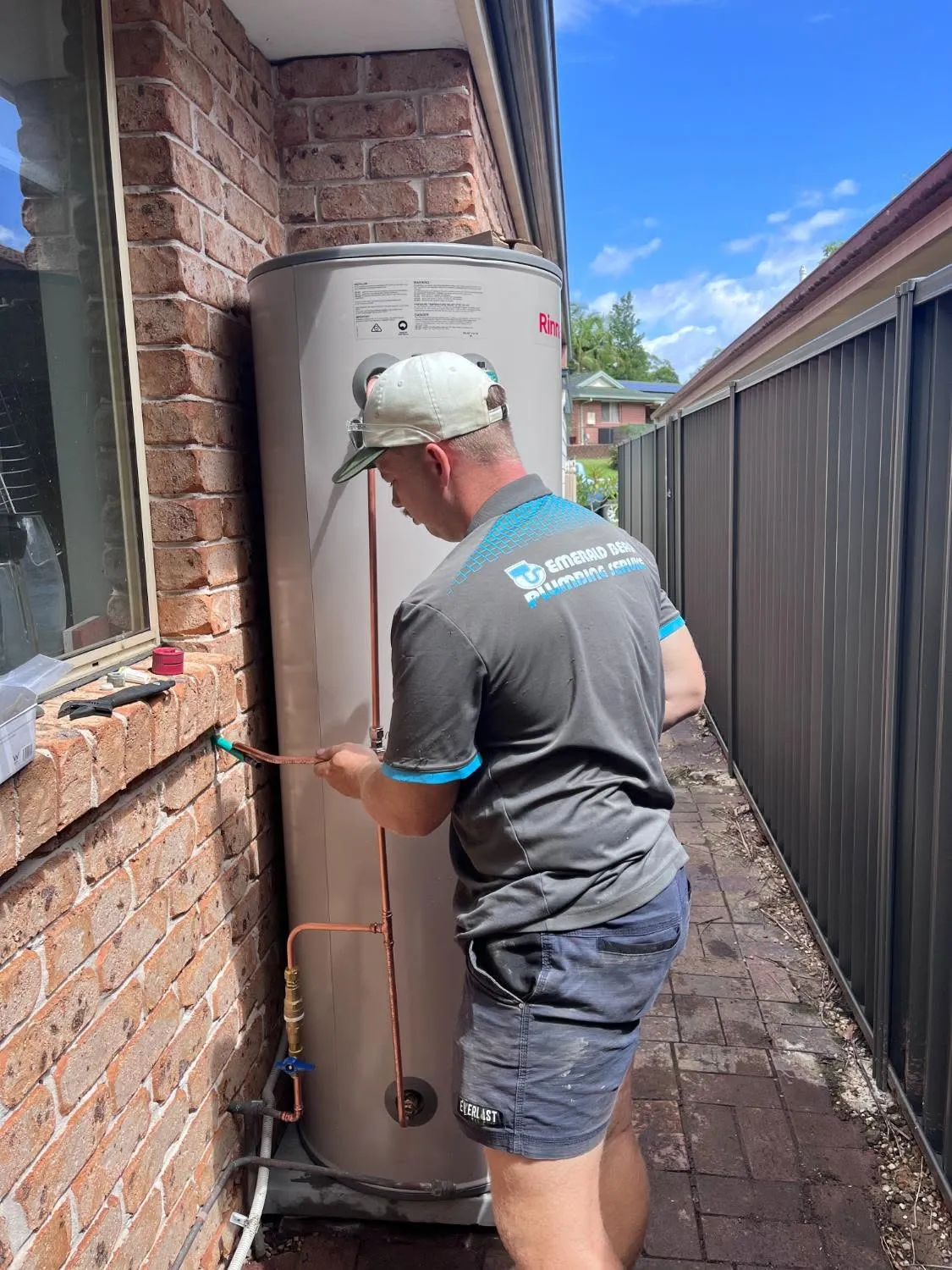
Some signs should never be ignored: persistent leaks, a burning smell, no hot water after basic checks, a gas smell or pilot problems, or the power repeatedly tripping. A licensed technician can run full diagnostic testing, replace heating components, repair valves, carry out safety checks on gas and electric systems, and give you honest advice on repair versus replacement. As an Official Rinnai Service Agent that also services all the major brands, Emerald Beach Plumbing has you covered whatever system you have got.
Frequently Asked Questions
Why is my hot water suddenly cold?
The usual culprits are a tripped circuit, a pilot light that has gone out, or a failed heating element or thermostat. Check the power or pilot first, and if there is still no hot water, or you smell gas, call a licensed technician.
Is a leaking hot water system an emergency?
A small drip from a valve is worth booking in promptly, but a leaking tank or a steady flow of water should be treated urgently. Turn off the supply and call a plumber, as a leaking tank usually means the unit needs replacing.
How long should a hot water system last?
As a rough guide, electric systems last around 10 to 15 years, gas around 8 to 12 years, and solar around 15 to 20 years, though coastal conditions can shorten that.
Can I fix a hot water system myself?
You can safely check the power, relight a pilot and reset the unit, but anything involving gas, electrical components, leaks or the tank itself should be left to a licensed professional for safety and warranty reasons.
Need Fast Hot Water System Repair? We’re Here to Help
If your hot water is misbehaving and the simple checks have not sorted it, do not put up with cold showers. The team at Emerald Beach Plumbing provides fast, reliable hot water system repair across the Coffs Coast, from Emerald Beach and Sawtell to Woolgoolga and the wider Mid North Coast, and we will have things sorted before the next cold morning.
Lost your hot water? Call Emerald Beach Plumbing on (02) 6650 0544 and we will get you back up and running, or submit an online enquiry through our contact form. For after-hours breakdowns, our 24/7 emergency line is on 0418 106 386.